Monday, April 6, 2015

Archaeological Dig Helped Date Deaver House

"Old Deaver House" purchased by the
Transylvania County Historical Society in 1987.
In 1987 the “Old Deaver House” was to be torn down to make way for development when a group of people interested in saving the local landmark formed the Transylvania County Historical Society and bought the house, barn and nearly four acres.

Initially it was believed the house had been built by William Deaver in the 1830s.  However clues found in deed research, the house’s architecture, an archaeological dig and a dendrochronology study showed that it is actually much older.

Benjamin Allison purchased 250 acres on both sides of Benjamin Davidson’s River from James Patton and Andrew Erwin in 1813.  The property had originally been purchased from the State of North Carolina by Waightstill Avery in 1798, later sold to Edward Johnston, then to Patton and Erwin in 1803.  It was this property that William Deaver purchased from Allison in 1830.

The deed between Allison and Deaver reads, ”including the house where said Allison now lives and including all the lands contained in said tract of two hundred fifty acres granted to Waighstill Avery on both sides of Davidson’s River except such part as the said Benjamin Allison did convey to John Davis.”

Architects estimated that the south side of home had been constructed in the early 1800s and the north side added between 1835 and 1845.

In 1990 Ruth Wetmore led an archaeological dig aimed at learning more about the home and any outbuildings that would have been located nearby.  The primary area of focus was beneath the north side addition.  This area would have been the yard for the original part of the house. 

A variety of small items, lost or discarded over time, were unearthed during the dig.  These included pieces of broken glass and dishes, old nails, shoes, combs, and buttons (including one from a Civil War Confederate uniform).

The item that revealed the best information for dating the addition to the house was a piece of an ironstone platter with the trademark of James Edwards of Staffordshire, England.  The trademark dated the piece from 1842-1850.  The location of that piece aided in determining that the north side of the home was built after 1842. 

A dendrochronology study was conducted in 1998.   Core samples from wooden timbers were compared to a catalogue of dated samples.  By identifying near identical growth patterns it was determined that the timbers had been cut in 1814.  This evidence was used to date the house to 1815.

The Transylvania County Historical Society will be celebrating the Allison-Deaver House’s 200 years throughout the summer.  It is the oldest standing frame house in Western North Carolina and is listed on the National Register of Historic Places. 


Photographs and information for this column are provided by the Rowell Bosse North Carolina Room, Transylvania County Library.  Visit the NC Room during regular library hours (Monday-Friday) to learn more about our history and see additional photographs.  For more information, comments or suggestions contact Marcy at marcy.thompson@transylvaniacounty.org or 828-884-3151 X242.

Monday, March 30, 2015

Davidson River Was Commercial Center


On August 1, 1783 both James Davidson and Benjamin Davidson applied to the State of North Carolina for land along the French Broad River.  The process completing these sales was not finalized until November 16, 1790.  They were the first settlers to own land in what would become Transylvania County.

Benjamin Davidson’s property included a smaller river that flowed into the French Broad.  It was here that he built his home about 1794.  The smaller river became known as Ben Davidson’s Creek and later Davidson River.

Another early settler was Lambert Clayton.  Clayton was a leader in the early local government and assigned to build a wagon road along the Cherokee’s Eastatoe Path from the Swannanoa River to the Davidson River and on westward.

Benjamin Allison came to the area in 1813.  He built a large wood frame home within sight of both the Davidson River and the road, known as the Boyleston Road.

The Boyleston Road from Asheville and Crab Creek Road from Flat Rock brought enough settlers to the area to create a need for a church and school.  Ben Davidson gave land to build a meeting house.  This facility served various denominations on Sundays and as a private school, Davidson River Academy, during the week.  In 1828 it officially became the Davidson River Presbyterian Church.

Cagle's Linsey-Woolsey Mill on the Davidson River
In addition to these pioneers the Davidson River has also been home to numerous business.  Leonard Cagle operated a grist mill near Sycamore Flats on the river.  His son, Henry, manufactured linsey-woolsey fabric at a mill just downstream. 

Further upstream Charles Moore, James Patton and Thomas Miller contracted with George Shuford to build a forge and the Davidson River Iron Works mill.  Iron ore was hauled from Boylston Creek to make iron bars.  The bars were sent to Asheville to be made into goods.  During the Civil War it was operated by the Confederacy.

In the early 1900s Brevard Tannin was located on the French Broad River near the mouth of the Davidson River.  From 1912-1957 Carr Lumber Company’s saw mill and lumber yard were located along the river.   The Ecusta Paper Mill operated on the river’s banks from 1939-2002.

Davidson River Valley, 1930s.  Right:  Gash Home on Vanderbilt (Ecusta) Rd.  Carr Lumber in the distance.
Today local businesses like Sycamore Cycles, Hub, Davidson River Outfitters and Dolly’s Dairy Bar make their home at the crossroads leading into Brevard and the Pisgah National Forest.

Upcoming Picturing the Past columns will feature the house built by Benjamin Allison, which has stood watch over the Davidson River area for 200 years.

Visit the Transylvania Heritage Museum on West Main St. through mid-May to learn more about the Davidson River area history.

Photographs and information for this column are provided by the Rowell Bosse North Carolina Room, Transylvania County Library.  Visit the NC Room during regular library hours (Monday-Friday) to learn more about our history and see additional photographs.  For more information, comments or suggestions contact Marcy at marcy.thompson@transylvaniacounty.org or 828-884-3151 X242.


Monday, March 23, 2015

Circuit Rider Built English Chapel

Transylvania County’s Methodist churches got their start by holding services in homes or shared meeting houses.  In remote areas, like the mountains of Western North Carolina, circuit riders traveled assigned areas preaching to settlers and organized congregations.

In 1857, 29-year-old Alexander Fletcher English came to what was then Henderson County as a circuit rider.  Two years later he married Melvina Young, the daughter of Strawbridge Young who was an early settler on the Davidson River. 

Rev. English was strongly opposed to slavery and the viewpoint of the Methodist Episcopal Church South on this issue.  He gathered together a small congregation of followers and started a church that remained with the northern body of the Methodist Church on property belonging to his father-in-law.  The church was originally known as Young’s Chapel but soon became English Chapel.  On May 12, 1867 Young sold the property to English for $5.00. 

English Chapel School
The first church building was a built of timber from English’s land.  For many years it served Methodists on one Sunday and other congregations the remainder of the month.  It was also the schoolhouse for children throughout the Davidson River and Avery’s Creek area well into the 1900s.

In the mid-1890s George Vanderbilt bought thousands of acres spreading nearly from Asheville to Brevard, including land all around the English Chapel.

Sylvan Valley News articles from the early 1900s regularly report of preaching, old-time singings, box suppers, revivals and meetings held at English Chapel.  An April 8, 1904 article states, “As a church building the chapel is not much to brag on, but it stands in one of nature’s beauty spots on the banks of Davidson river—an ideal spot for a church; and by erecting a neat house of worship Mr. Vanderbilt would win the loving remembrance of all the good people of the section.”

George Vanderbilt died suddenly in 1914.  Within two years his widow, Edith, sold 86,700 acres to the U.S. government to help create Pisgah National Forest.  The unique location within a national forest have helped to preserve the natural beauty around English Chapel for nearly another 100 years.

Congregation at English Chapel
Repairs were made to the original wooden chapel in 1914 but it was not until 1940 that a new church was constructed.  The new church was constructed with rocks from the Davidson River as well as from neighboring states.  The words “English Chapel” are spelled out over the entrance.

Located near the Davidson River Campground in the Pisgah National Forest English Chapel continues to hold weekly services for locals and visitors.


Photographs and information for this column are provided by the Rowell Bosse North Carolina Room, Transylvania County Library.  Visit the NC Room during regular library hours (Monday-Friday) to learn more about our history and see additional photographs.  For more information, comments or suggestions contact Marcy at marcy.thompson@transylvaniacounty.org or 828-884-3151 X242.

Monday, March 16, 2015

Area Trout Fishing Dates to the Late 1800s

Postcard—
Trout fishing below White Water Falls
 in the beautiful Sapphire section of North Carolina.
Trout fishing as a sport in Western North Carolina dates to the late 1800s when George Vanderbilt owned what is today the Pisgah National Forest.  Tourism brochures from the early 1900s boost of “brooks and streams teeming with gamey mountain trout.”  A 1914 Southern Railways publication featured a photograph of a fisherman, “where trout abound” below Toxaway Falls.

 A 1929 brochure states that “rearing pools” in the Pisgah National Forest have been established to raise fish from government hatcheries that are released into local streams when they are five inches long.

In 1937 the CCC built a Fish Rearing Station on the Davidson River near Daniel Ridge in the Pisgah National Forest.  After construction the Fish and Wildlife Service took over administrative responsibilities and the Forest Service provided maintenance of the facility.  This facility was closed down in the mid-1960s because of its deteriorating condition.

A second hatchery was constructed in 1957 on the Davidson River near John’s Rock.  This hatchery, officially The Bobby N. Setzer Hatchery, has grown into the largest trout hatchery in North Carolina.  Since 1983 it has been operated for both production and distribution purposes by the North Carolina Wildlife Resources Commission.

Fishing in the Davidson River.
The hatchery raises brook, brown and rainbow trout in indoor tanks.  Fingerlings of approximately three inches live in outdoor raceways.  When the trout reach a size of at least 10 inches they are ready to be released into streams throughout Western North Carolina.  In addition the hatchery has facilities to study fish disease and nutrition and monitor water quality.  The water supply for the hatchery operations comes from Grogan Creek and the Davidson River.

Also located at the hatchery, the Pisgah Center for Wildlife Education features a raceway exhibit that describes the trout production process.  It is open daily from 8:00 am - 5:00 pm.

Photographs and information for this column are provided by the Rowell Bosse North Carolina Room, Transylvania County Library.  Visit the NC Room during regular library hours (Monday-Friday) to learn more about our history and see additional photographs.  For more information, comments or suggestions contact Marcy at marcy.thompson@transylvaniacounty.org or 828-884-3151 X242.

Monday, March 9, 2015

Lydays Led Early Medical Movement

When Andrew Jackson Lyday attended medical school at the Medical College of Charleston in the mid-1840s he had no idea that the Lyday name would be associated with more than 100 years of medicine in a place that hadn’t even been established as Transylvania County yet.  Andrew Jackson Lyday was born May 13, 1824.  At the time the Lyday home and farm was located in Buncombe County, later it became a part of Henderson County (1839) and finally Transylvania County (1861). 

Front: Dr. A.J. Lyday, Elizabeth Lyday, Alice Blythe, Jerusha Surrette, 
Donna Owenby, Elizabeth Allison.  
Back:  Leon “Faid” Lyday, Rosa Morgan, Elzie Lyday, Andrew Lyday, 
Dr. Elliott Lyday, Dr. William Lyday, George Lyday.
Following medical school Lyday returned home and married Elizabeth Clayton in 1847.  They built a log cabin on Lyday family land west of present day Penrose.  The Lyday’s had a large farm and a large family of 12 children.  The soon built a larger frame home which stood until the early 1990s.

Dr. A.J. Lyday was the only doctor for miles around.  He made house calls on horseback and had an office beside his home.  Dr. Lyday practiced medicine in the community for more than 40 years.  He died September 1, 1890 and is buried in the Davidson River Cemetery.


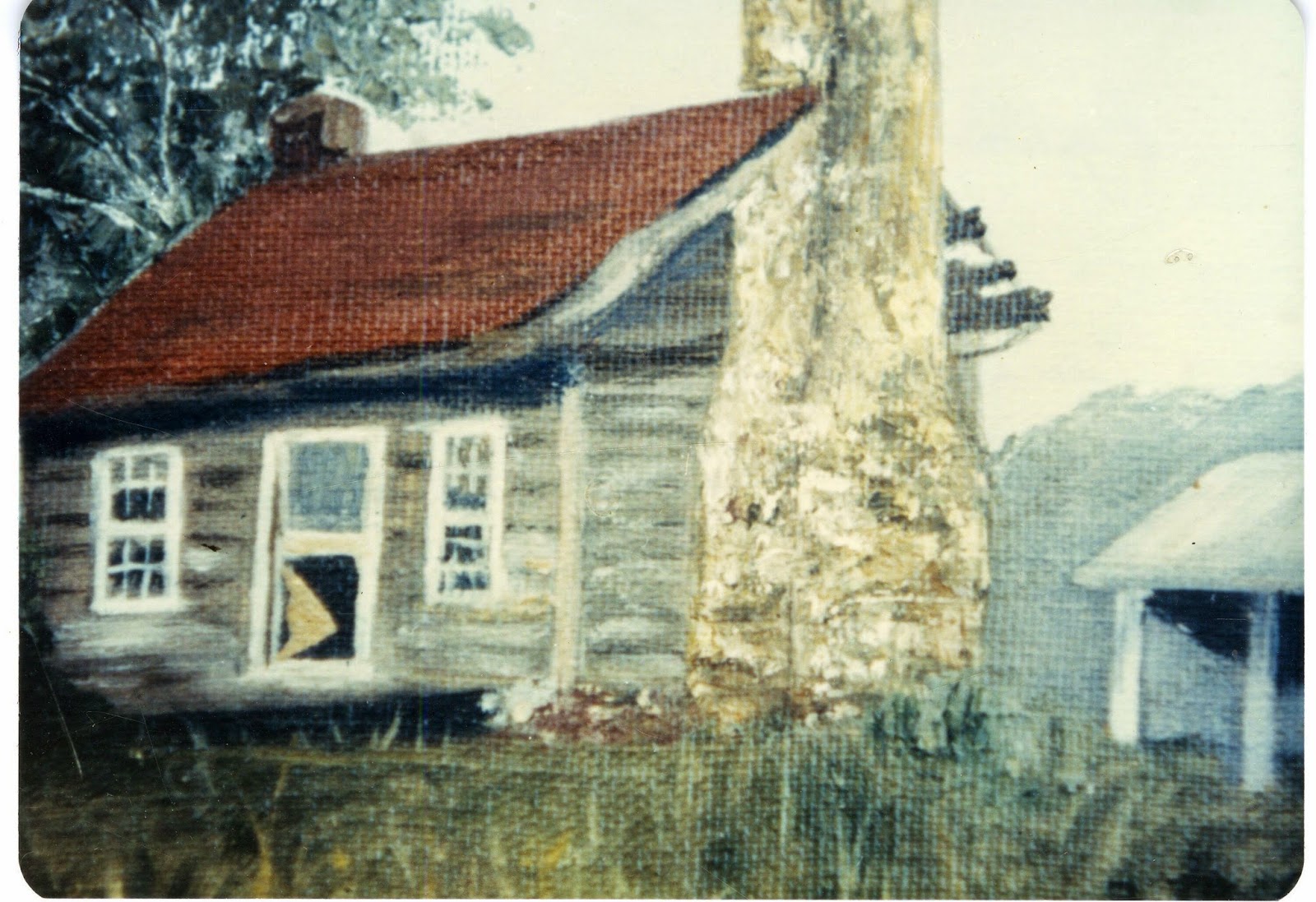
Painting of Dr. A.J. Lyday’s office on the family farm.
Two of the Lyday’s sons also became doctors.
 
William Monroe “Dr. Bill” attended medical school in Baltimore, Maryland.  He practiced medicine in Transylvania County from 1886-1932.  Dr. Bill died on August 15, 1932.  His obituary tells of his joy just 10 weeks earlier at the opening of the Lyday Memorial Hospital, named for his father.  All three of Dr. Bill’s sons, two grandsons and two great-grandsons were also doctors.

Abraham Elliott “Dr. L” was both a medical doctor and a dentist.  Like his father, he attended the Medical College of Charleston.  Dr. L served the Little River community from 1891 until his death in 1929.

A.J. and Elizabeth Lyday’s youngest son, Leon, was a teacher and farmer in Transylvania County.  Two of Leon Lyday’s sons followed in the family tradition and became doctors as well.  Like his grandfather and uncles, Dr. Wilson Lyday practiced medicine in Transylvania County for more than 40 years.  Dr. John Lyday’s career took him to other places.

John Lyday, who had attended Western Carolina, was a chemist at Ecusta before serving as a gunner and radio operator in WWII.  After the war he attended the University of North Carolina at Chapel Hill and medical school at the University of Pennsylvania.  He was a Captain and surgeon with the 8055th Mobile Army Surgical Hospital (M*A*S*H*) unit in Korea.

While in Korea, Lyday worked with Dr. Richard Hornberger who later wrote about life with a mobile military hospital unit using the pen name Richard Hooker.  The 1970 movie and 1972-1983 television series M*A*S*H* was based on Hornberger's novel.  Although Hornberger’s stories wove together many people and events he encountered, he loosely based the character of Trapper John on Dr. John Lyday
.
Following the Korean Conflict, Dr. John Lyday continued his medical training then joined his cousin, Dr. Russell Lyday, in practice in Greensboro in 1958.  He served was Chief of Surgery at Moses Cone Hospital (1973-75) and retired in 1989.

Although the home, farm buildings and Dr. Lyday’s office are all gone Lyday family descendants still own the property.

Photographs and information for this column are provided by the Rowell Bosse North Carolina Room, Transylvania County Library.  Visit the NC Room during regular library hours (Monday-Friday) to learn more about our history and see additional photographs.  For more information, comments or suggestions contact Marcy at marcy.thompson@transylvaniacounty.org or 828-884-3151 X242.